
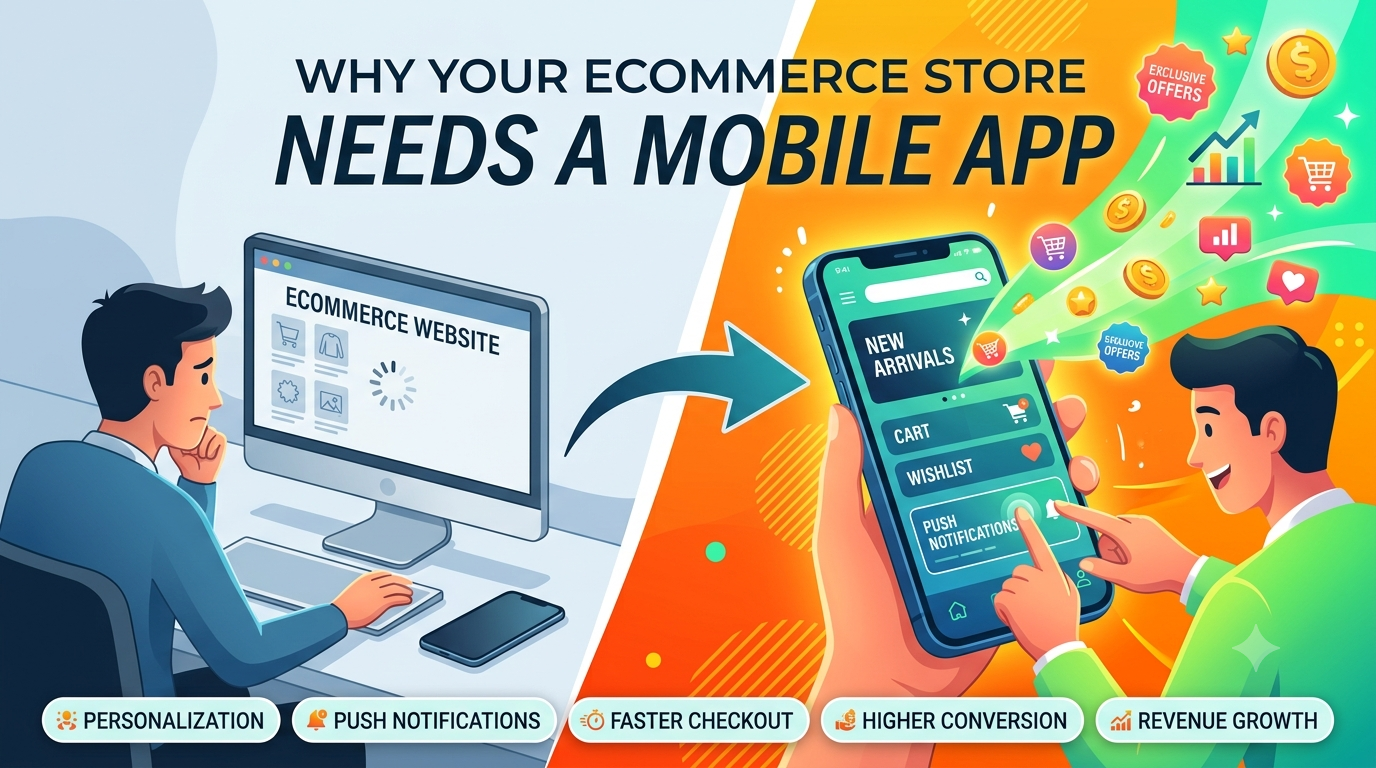
Your Shopify or WordPress store works hard for every visitor, yet most of that traffic browses on a phone and still checks out through a mobile browser. That gap costs you sales. An ecommerce mobile app closes it by giving shoppers a faster, stickier way to buy, and giving you a direct channel to bring them back without paying for another ad click.
Every store owner asks the same question eventually: is an ecommerce mobile app worth building, or is a fast mobile website enough? The answer usually comes down to how much repeat business you want to protect.
The Shift to Mobile-First Shopping
Shoppers no longer treat mobile as a secondary device. Most product discovery, cart building, and even final checkout now happens on a phone screen. A store built only for desktop or a responsive mobile site is competing for attention inside a browser tab, next to a dozen other open tabs and notifications.
An ecommerce mobile app changes that dynamic. Once a customer installs your app, your brand sits on their home screen with its own icon, its own space, and no browser chrome competing for attention. That single change shifts how often a customer thinks about your store between purchases.
Why a Mobile Website Alone Isn't Enough Anymore
A responsive website is still necessary, but it was never built to compete with a native experience. Mobile sites reload every page, ask shoppers to re-enter payment details, and lose the visitor the moment they switch apps or lock their screen.
An ecommerce mobile app solves each of those friction points:
- Pages and product images load instantly because the app stores data locally instead of pulling everything fresh from a server.
- Saved cards and addresses turn checkout into a one-tap action instead of a multi-step form.
- The app keeps working (browsing saved items, viewing order history) even with a weak connection.
None of this replaces your website. It gives your most loyal customers, the ones who buy again and again, a faster path back to checkout.
Mobile App vs. Mobile Website: The Real Difference
The comparison usually comes down to three areas: speed, engagement, and ownership of the customer relationship.
Speed. A native ecommerce mobile app loads product pages and images from local storage, so browsing feels instant compared to a site that fetches everything from a remote server on every tap.
Engagement. A mobile website has no way to reach a customer once they close the tab. An app can send a push notification the moment a price drops, a cart sits abandoned, or a back-in-stock item returns, and that channel does not depend on an email inbox or an ad platform's algorithm.
Ownership. Every email sent through a marketing platform and every ad shown on social media costs money and depends on rules you do not control. A customer who has installed your ecommerce mobile app is reachable directly, for free, for as long as they keep the app installed.
Key Benefits of Adding a Mobile App to Your Store
Higher conversion rates. Fewer steps between "add to cart" and "order confirmed" means fewer chances for a shopper to abandon the purchase. Saved payment methods and one-tap checkout remove the biggest source of cart abandonment on mobile.
Stronger retention. A shopper who installs your app has already shown intent to buy from you again. Push notifications give you a way to bring them back without competing for space in a crowded inbox.
Bigger average order value. Shoppers browsing inside an app tend to explore more of the catalog per session, since navigation is faster and there is no risk of losing their place by accidentally closing a browser tab.
Direct, cost-free marketing. Once a customer opts in to notifications, every campaign you send afterward costs nothing beyond your existing subscription, unlike paid social or search ads that charge per click regardless of whether the shopper converts.
Brand presence on the home screen. An icon sitting on a customer's phone is a daily reminder of your brand, something a bookmarked website can never replicate.
How EcomAppify Makes This Simple
Building a native app used to mean hiring iOS and Android developers, waiting months for a release, and paying for ongoing maintenance every time your store's theme changed. That barrier kept mobile apps out of reach for most small and mid-sized stores.
EcomAppify removes that barrier by connecting directly to your Shopify or WordPress store and turning it into a fully native iOS and Android app without writing code. Products, inventory, pricing, and customer accounts stay synced automatically, so anything you update in your store admin appears in the app right away.
Choosing the Right Time to Launch Your App
Not every store needs a mobile app on day one. It usually makes the most sense once you have a base of repeat customers worth re-engaging, a catalog large enough to reward easy browsing, or a marketing budget that is starting to feel stretched thin on paid ads. If any of those describe where your store is right now, that is a strong signal the return on a mobile app will show up quickly in retention and repeat orders.
What to Look for Before You Commit to a Platform
Not every app builder fits every store, so it helps to check a few things before you sign up for any platform.
Real-time sync. Confirm that product, inventory, and pricing changes made in your Shopify or WordPress admin reflect in the app automatically, without a manual export or re-upload step.
Design control. Templates are a fast starting point, but you should be able to adjust colors, layouts, and branding so the app looks like an extension of your store rather than a generic shell.
Push notification limits. Some plans cap the number of notifications you can send each month. If re-engagement is your main goal, check that the tier you choose supports the volume your customer base needs.
App store submission support. Publishing to the Apple App Store and Google Play involves review guidelines that catch first-time submitters off guard. A platform that handles this step for you saves real time.
Transparent pricing. Look closely at setup fees, monthly costs, and whether the platform charges a success fee on top of your in-app sales, since that can add up quickly as your order volume grows.
Frequently Asked Questions About Ecommerce Mobile Apps
Does a mobile app replace my website?
No. Your website still handles first-time visitors and search traffic. The app works alongside it, focused on turning existing customers into repeat buyers.
How long does it take to launch an ecommerce mobile app?
With a no-code platform like EcomAppify, most stores go live within 7 to 14 days, including design customization and app store submission.
Do I need developers to build and maintain the app?
No. A self-service platform connects to your store's API and syncs products, orders, and customers automatically, so no coding or ongoing developer support is required.
Ready to Turn Your Store Into an App?
Mobile shopping is not a trend to watch from the sidelines; it is where your customers already are. An ecommerce mobile app gives them a faster way to buy and gives you a direct line back to them, without the recurring cost of ads or emails competing for attention. Get in touch to see how quickly your store could go live.